
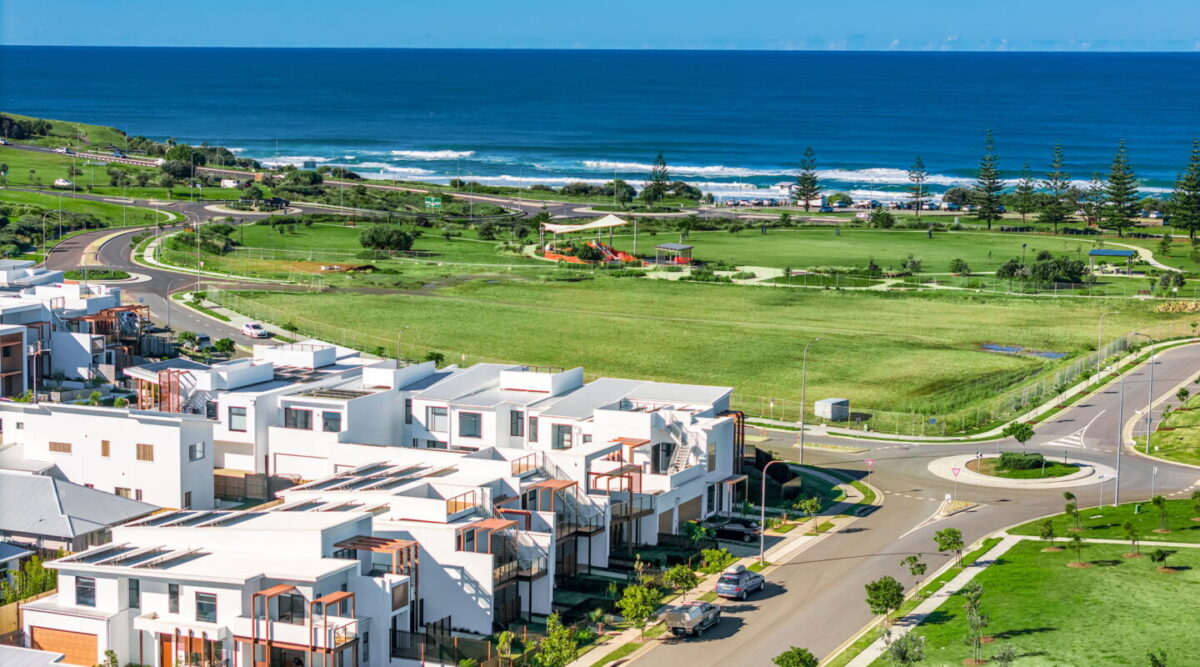
Australia’s housing conversation has long been framed as a choice between detached homes and high-rise apartments. Yet for many buyers, neither option reflects the way they want to live or what they can realistically afford.
Between these two housing types sits the “missing middle”: townhomes, terraces, duplexes and other forms of medium-density housing. Long discussed by planners and urban designers, this housing typology is now moving into the mainstream as governments look for practical ways to increase housing supply while protecting the character of established communities.
While medium-density housing has been part of Victoria’s urban landscape for decades, it remains a relatively new concept across many parts of Queensland and northern New South Wales, where detached homes have traditionally dominated. However, as population growth accelerates, land becomes more expensive, and housing affordability continues to decline, those markets are beginning to face many of the same challenges Melbourne has grappled with for years.
The result is a growing recognition that Australia’s housing future cannot rely on one housing type alone.
Why the middle matters
Australia’s households are changing. More people are living alone or as couples without children, families are seeking more attainable pathways into home ownership, and downsizers are looking for homes that require less maintenance without sacrificing lifestyle.
At the same time, detached homes are becoming increasingly difficult to access in many markets, while apartments are not the right fit for everyone. Many buyers still value private open space, secure parking and a stronger connection to the street, particularly families, owner occupiers and those planning for the long term.
Medium-density housing fills that gap.
Townhomes offer a way to deliver more homes in well-connected locations while maintaining many of the qualities buyers value most. They make better use of existing infrastructure, support more efficient land use and broaden housing choice without fundamentally changing the character of a neighbourhood.
Rather than replacing the detached home, they expand the range of housing available to suit different life stages, household sizes and budgets.
Avant Townhomes: model in practice
For Intrapac, medium-density housing is not a new concept.
Through Avant Townhomes, the business has been delivering architecturally-designed townhome communities for more than a decade, adapting each project to its location rather than applying a standardised approach across different markets.
What began as a coastal offering at QUAY2 in Victoria has evolved into communities across metropolitan, regional and coastal locations, demonstrating that the principles behind medium-density housing remain consistent even as local conditions change.
One example is Three82 Ivanhoe, where Avant Townhomes is delivering a boutique collection of residences within one of Melbourne’s most established suburbs. In locations like Ivanhoe, opportunities for new housing are limited, making thoughtful infill development increasingly important.
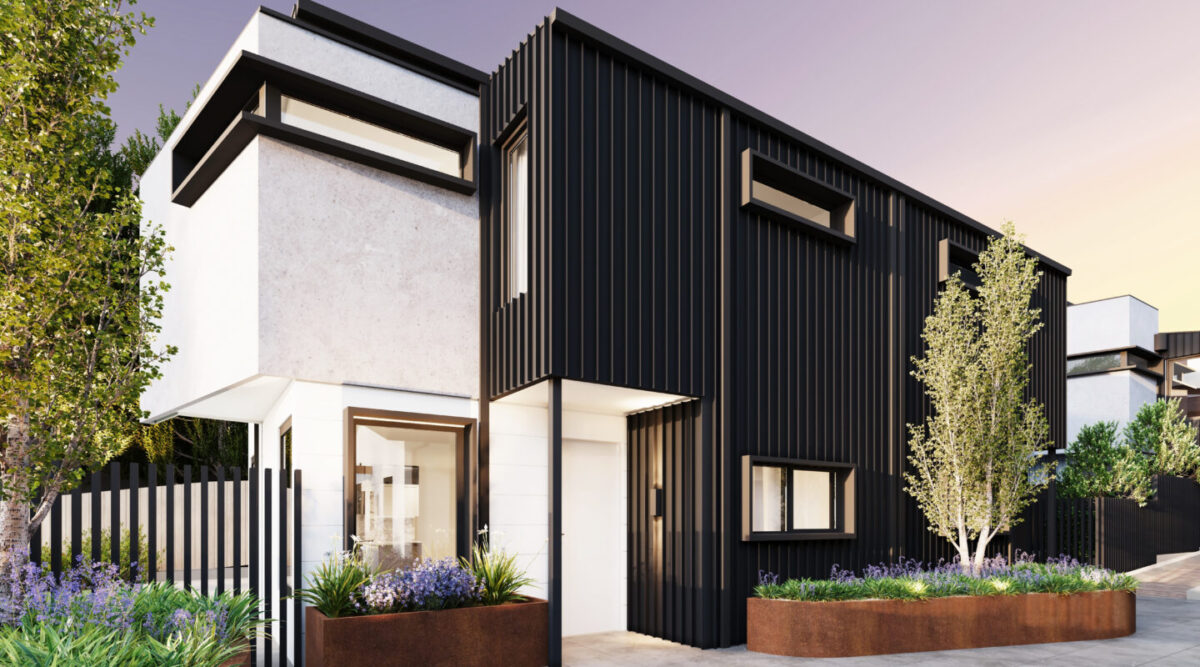
As Hamish Macdonald, Senior Consultant at Intrapac, explains, the opportunity lies in identifying well-located sites where thoughtful design can introduce new housing without compromising the qualities that make established suburbs desirable.
“We saw real potential in the location”. (Read more)
Projects like Three82 demonstrate what the missing middle looks like in practice. While infill development is inherently more complex than building within a greenfield community, it can unlock much-needed housing in locations where opportunities are increasingly scarce, without losing the character that makes these neighbourhoods so sought after.
David Lunardi, General Manager of Avant Townhomes, frames the opportunity in terms of access rather than just supply: the project gives buyers, particularly those looking to return to the area, a considered, contemporary way into a market that’s otherwise difficult to enter.
That’s the affordability argument in practice. It’s about building smaller, smarter and more efficiently on land that would otherwise sit out of reach for an entire bracket of buyers.
The same principles are emerging elsewhere
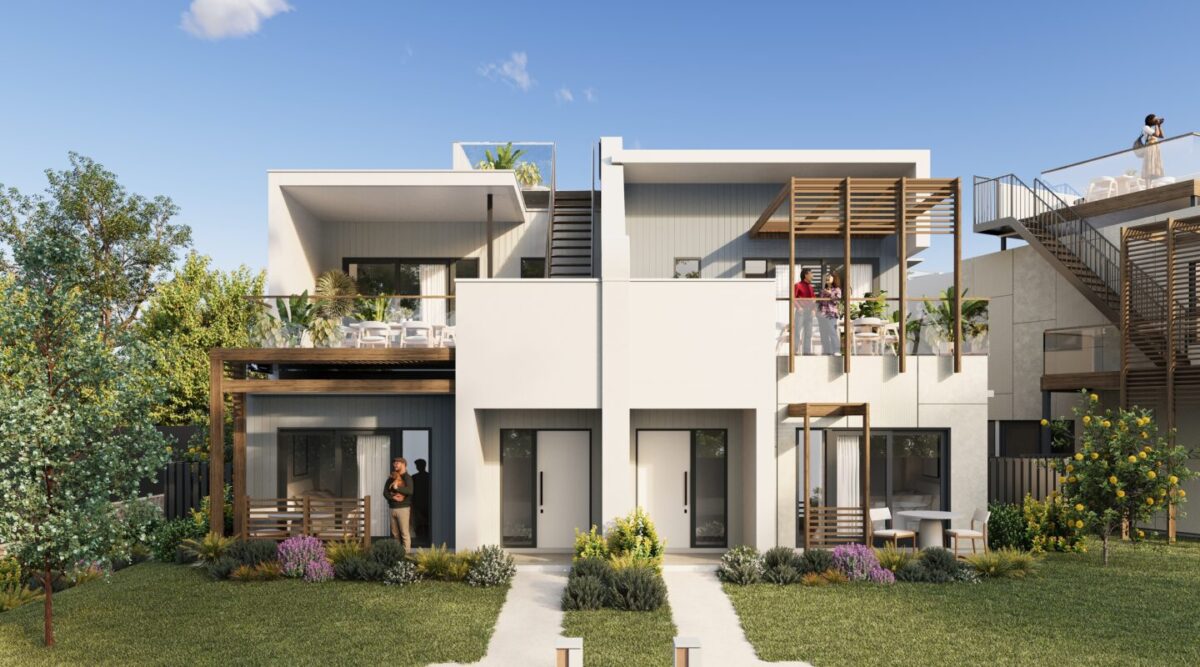
The same thinking underpins Avant’s beachfront townhomes at Aureus in Skennars Head, NSW, a market dominated for years by detached holiday homes and large coastal blocks. Here, the proposition was built around smaller, more energy-efficient dwellings purpose-designed for the coastal climate, without sacrificing the indoor-outdoor living that buyers come to the region for.
Max Shifman, CEO of Intrapac Property, has described the intent behind the format directly: the goal at Avant Townhomes is to design and build more advanced, beautiful homes that make efficient use of energy, space and land.
That philosophy reflects the broader purpose of the missing middle. It is not about asking buyers to compromise on quality or lifestyle. It is about creating well-designed homes that enable more people to access locations that may otherwise become unattainable.
A growing opportunity for Queensland
Queensland has historically been defined by larger suburban lots and detached housing. However, with South East Queensland experiencing some of Australia’s strongest population growth, housing diversity is becoming increasingly important.
As infrastructure investment, employment opportunities and interstate migration continue to reshape the region, the need for a broader mix of housing is becoming more apparent. Medium-density housing offers one practical way to respond, providing additional homes while supporting walkable communities, making better use of existing infrastructure and creating more attainable entry points into the market.
For buyers, it represents greater choice. For communities, it supports more sustainable growth. And for the broader housing market, it provides an important piece of the affordability puzzle.
Building the housing Australia needs
Australia’s housing challenges will not be solved by a single housing type.
Creating more liveable, resilient communities requires a diverse mix of homes that respond to changing demographics, different household structures and evolving buyer expectations.
Medium-density housing is one important part of that solution. It expands housing choice, makes better use of well-located land and creates opportunities for more people to live in the communities they value.
With more than a decade of experience delivering architecturally designed townhome communities across metropolitan, regional and coastal markets, Intrapac has seen how thoughtful medium-density housing can respond to local needs while supporting long-term community growth.
As the housing conversation continues to evolve, the missing middle is no longer a niche planning concept. It is becoming an increasingly important part of how Australia will deliver the homes future generations need.